

A Woman Who Refused to Be Small
She left rural Queensland as a girl with a voice and an audience to find. She sang and danced her way across Shanghai in the 1920s, ran a couture house in London under an assumed name and returned to Australia to build an empire in wallpaper and fabric. Every chapter was hers to write.
Florence Broadhurst entered the world in 1899 at a time when Australia itself was still young. Life moved at the pace of steam trains and steamships. News arrived by newspaper, journeys across the world took weeks and a young woman from rural Queensland could scarcely imagine that one day she would build businesses in Asia and Europe before transforming Australian design.
…but then Florence never measured her future by what others believed possible.
Music became her first invitation into a much larger world. As a young performer she discovered that audiences responded to far more than talent. They remembered confidence, elegance and personality. Years later Florence would apply exactly the same understanding to the rooms people lived in.
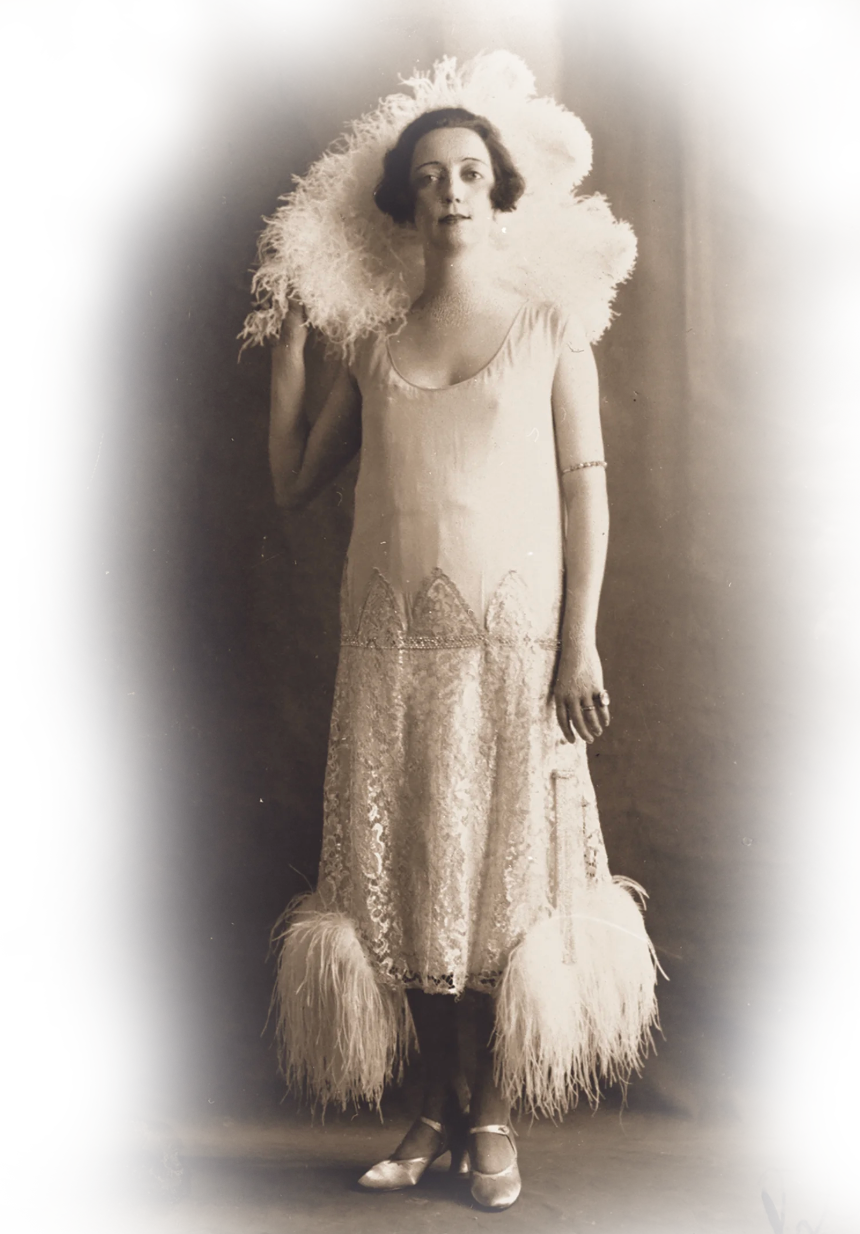
By the time she picked up a paintbrush in her fifties she had already lived enough lives for three women.
Shanghai and London
In 1922, at twenty-three years of age, Florence accepted an engagement with Dick Norton’s Globe Trotters and boarded a steamship bound for Asia. The voyage marked the beginning of an education that no university could have offered.
Shanghai became the first city to expand her understanding of what life could be. Chinese entrepreneurs, British merchants, American financiers, Russian émigrés and European artists shaped one of the world’s most cosmopolitan cities.
Florence immersed herself in gardens, textiles, porcelain, lacquerware, carved timber and architecture, quietly storing away ideas that would later emerge in unexpected ways.
London became her next classroom. Trading as Madame Pellier from New Bond Street, she entered one of the world’s great centres of luxury and learnt that luxury lived in craftsmanship, presentation and confidence.
When she returned to Sydney in 1949 she was fifty years old. Everything she had learnt travelled home with her.
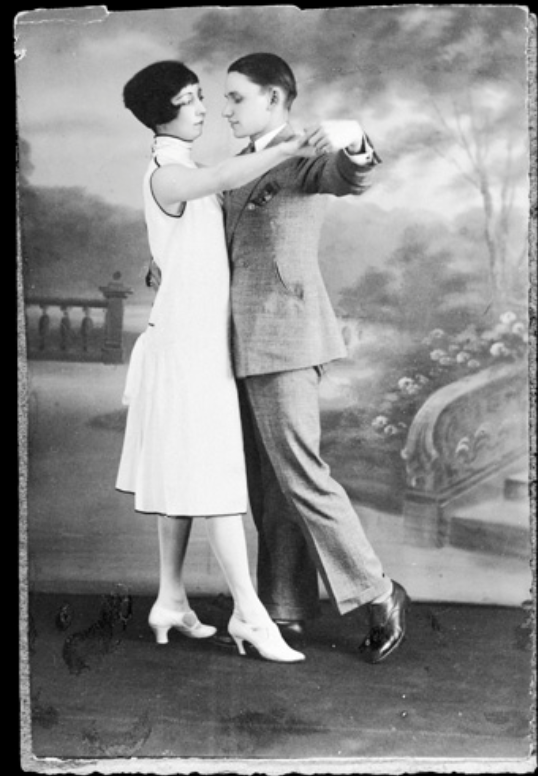
The Most Interesting Woman in the Room
Every panel carries her fingerprints. Florence Broadhurst™ is not an aesthetic borrowed from an era. It is one woman’s eye, her courage and her ability to recognise beauty long before others saw it.
Florence returned to Australia as a woman who had lived through three decades of extraordinary change across Asia and Europe. She had performed before international audiences, educated the children of Shanghai’s influential families and built a couture business on London’s New Bond Street.
She carried herself with elegance, impeccable presentation and an unmistakable sense of occasion. Years on stage had taught her that presence often spoke before words.
People remembered meeting Florence. They remembered the stories she told, the laughter she inspired and the feeling that they had spent time with someone who had lived a life far larger than their own.
Artists admired her because she thought differently. Business people admired her because she recognised opportunity. Florence possessed the ability to make everyone around her feel that the world had suddenly become a more interesting place.
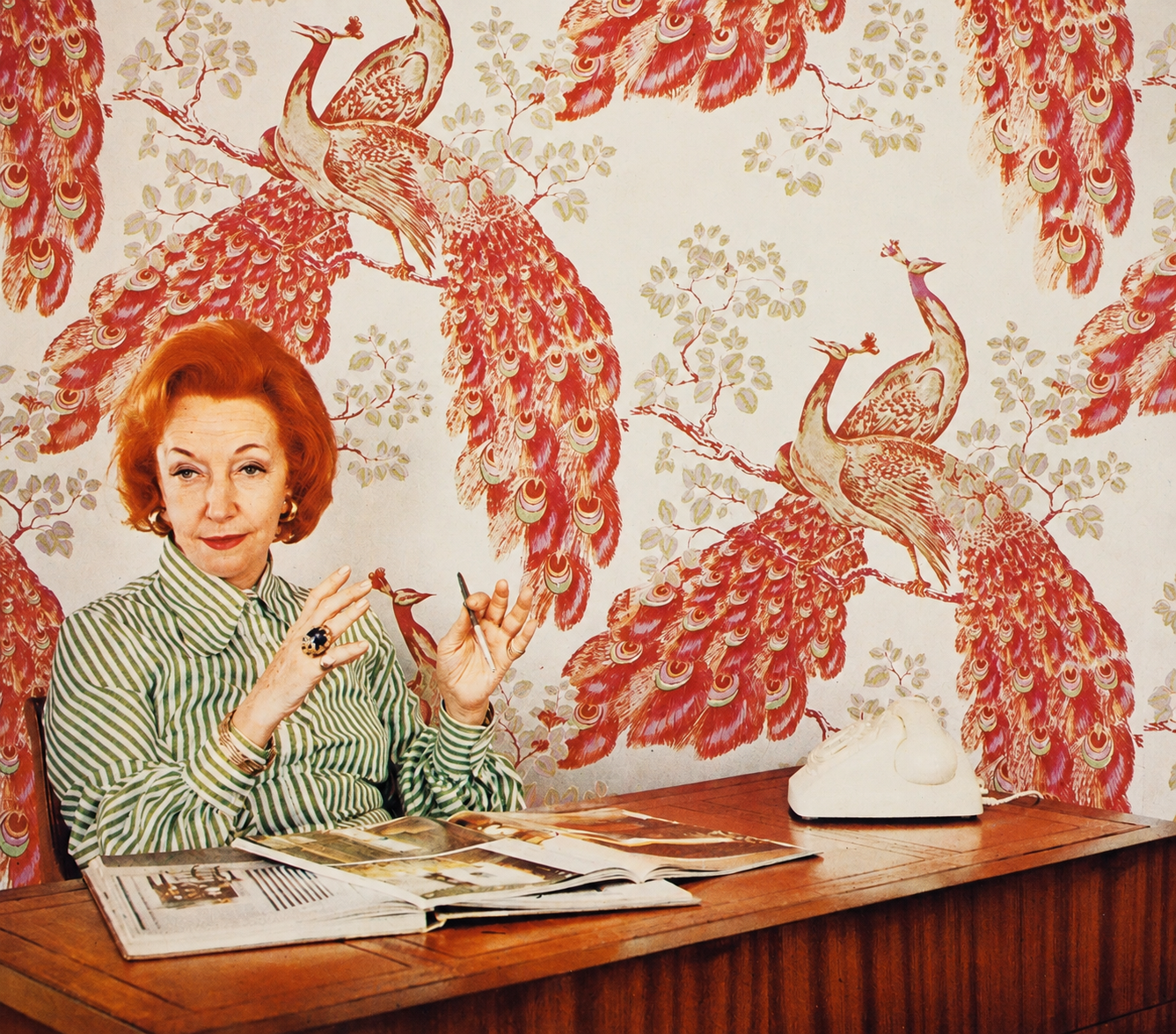
The Work That Defined Her
Painting became another outlet for her creativity. She travelled through New South Wales sketching and painting landscapes, later exhibiting through David Jones galleries. Those years sharpened an eye already trained by decades of travel.
The opportunity that changed her life arrived almost by accident. One of Florence’s tenants operated a small screen-printing business and struggled to pay the rent. Florence became fascinated by the process itself.
She watched screens being prepared, learnt how colours were built layer upon layer and recognised possibilities far beyond their existing use.
Where others saw a modest printing business, Florence saw an entirely new creative medium.
By the time Florence opened Australian Wallpapers she was fifty-nine years old. Florence had spent six decades preparing for it.
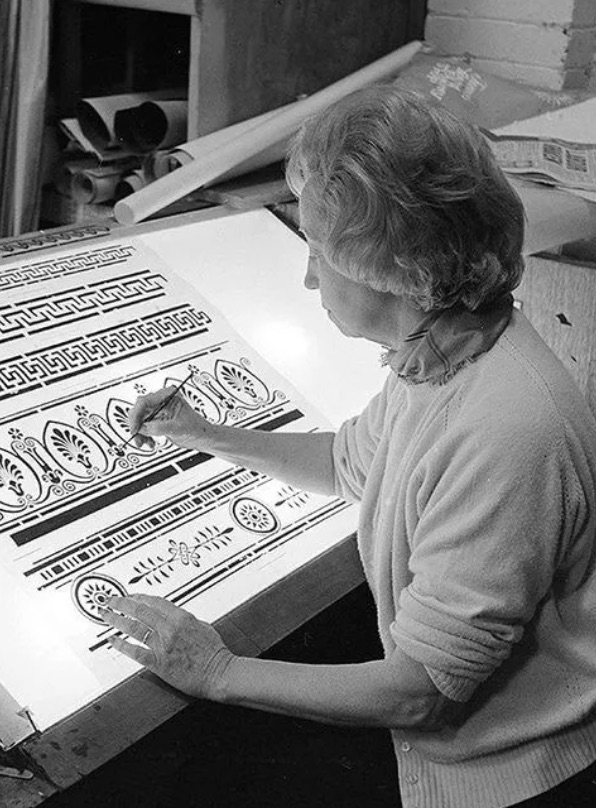
Building an Empire
Metallic backgrounds. Botanicals the size of a room. Geometry with the confidence to repeat itself into infinity.
Florence never approached wallpaper as decoration. She saw walls as the largest canvas in a room. They could alter mood, create drama, encourage conversation and completely change the experience of living in a space.
Building an Empire
In 1959, Florence Broadhurst founded Australian Wallpapers. What appeared to be the beginning of a new career was the moment every previous chapter of her life converged.
She established her studio in Paddington and directed artists as they translated ideas into finished designs. Scale became larger. Colour became richer. Composition became bolder.
Her collections grew rapidly. Botanicals towered across walls. Birds, bamboo, hand-drawn florals, geometrics and abstract forms appeared in combinations unlike anything else available in Australia.
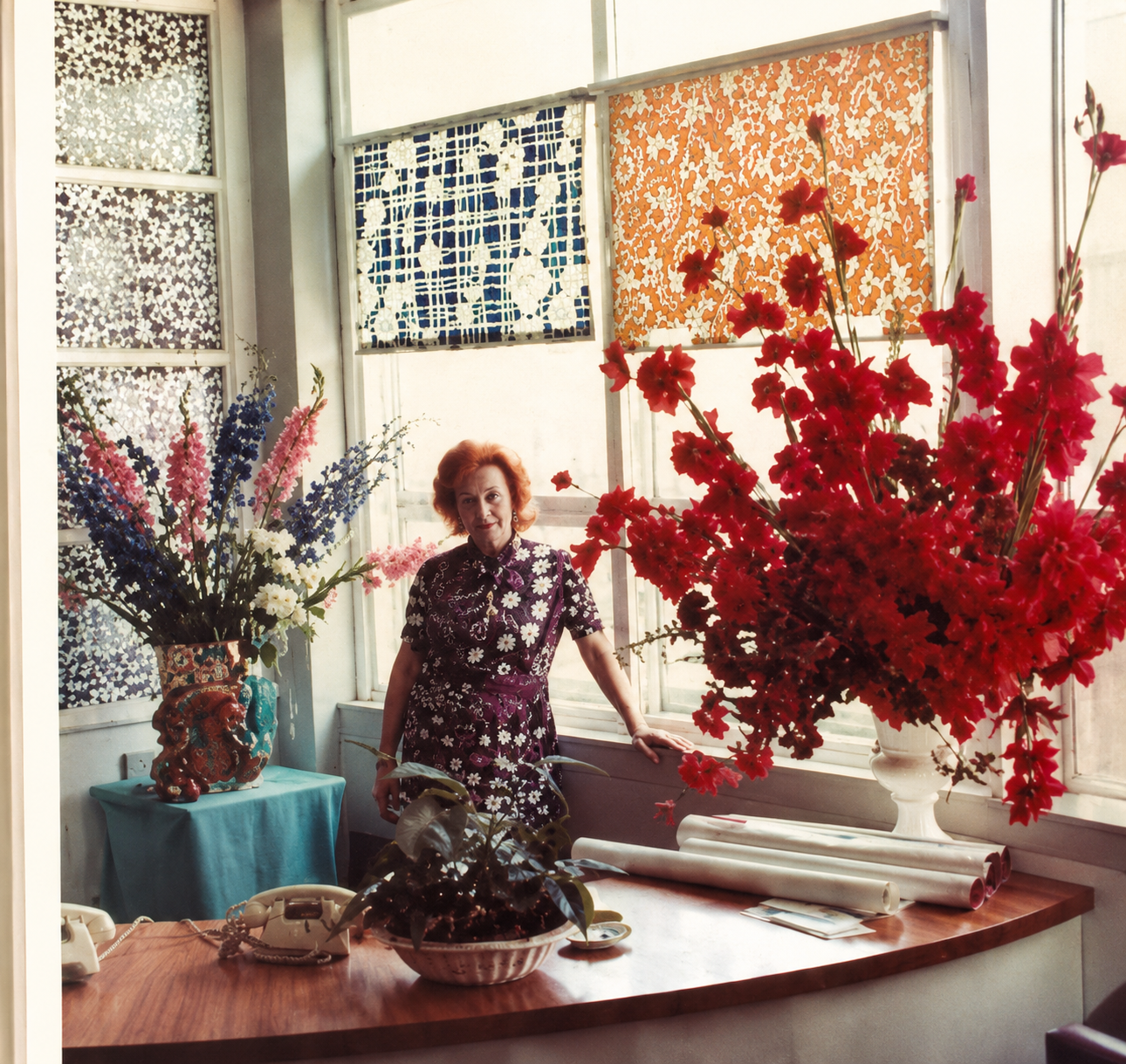
Guests arrived at the Paddington studio to see wallpaper and left remembering Florence.
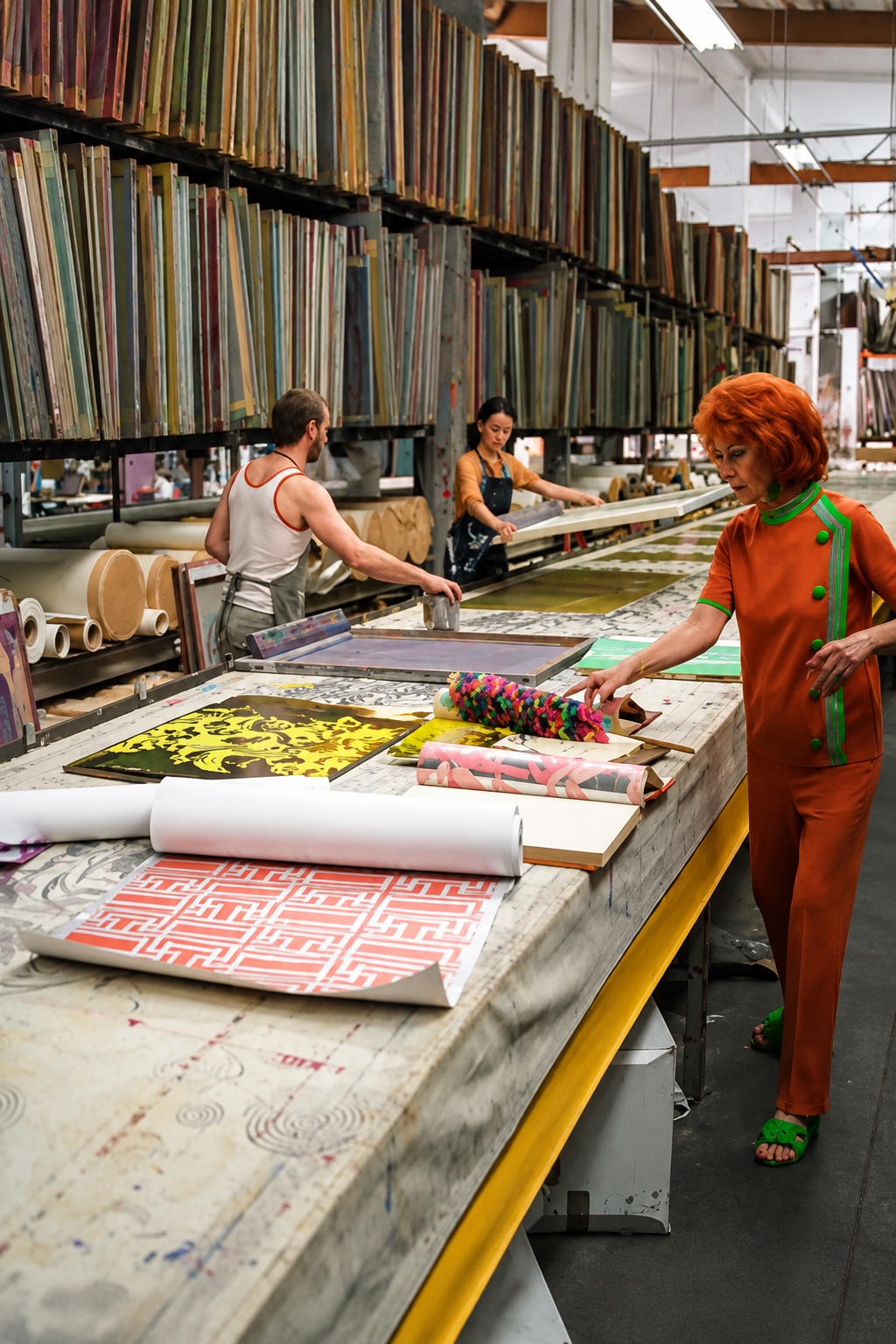
People rarely bought only a design. They bought into the remarkable woman who had created it.
Every Design Tells the Truth
Look closely and the archive reads like a diary.
Every country Florence had lived in left an imprint on the way she saw the world. Long before becoming a designer, she spent decades observing gardens, architecture, textiles, fashion, theatre, people and cities.
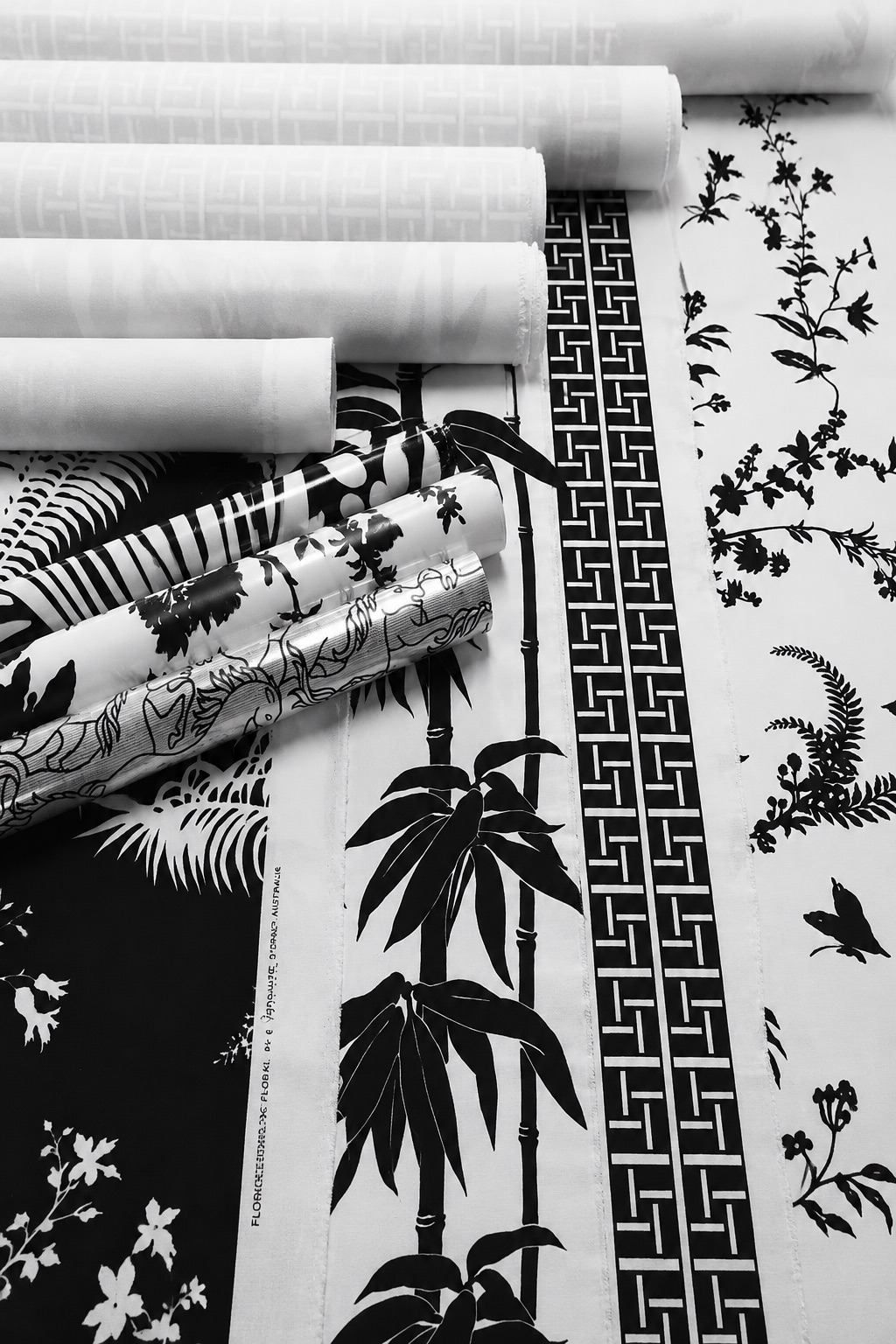
Birds carry echoes of the gardens and aviaries she admired throughout Asia. Bamboo, blossoms and layered chinoiserie reflect years spent immersed in Chinese culture. London appears in balance, elegance and restraint within complexity.
Australia remained equally present through native foliage, strong light and the expansive landscapes Florence painted after returning home.
Florence never copied nature. She amplified it.
Rhythm, movement and repetition created energy across a wall in much the same way music carried an audience through a performance.
The Signature
Her actual signature still marks every authentic piece—a woman’s name standing alone beneath work that needed no one else’s endorsement.

Across her life she used names with purpose. Bobby Broadhurst belonged to the stage. Madame Pellier belonged to Bond Street. Florence Broadhurst belonged to the work.
The signature confirms provenance, authenticity and continuity. It links every licensed expression back to one woman whose life had crossed stage, salon, studio and society before the archive existed.
An Extraordinary Life
By the mid-1970s Australian Wallpapers had become one of the country’s most recognisable design houses. Florence remained a constant presence in the studio, reviewing designs, directing artists, meeting clients and entertaining visitors.
On the evening of 15 October 1977, Florence remained working in her Paddington studio. She never returned home.
Her murder shocked Sydney’s creative community and became one of Australia’s most enduring unsolved crimes. The mystery, however, should never overshadow the far greater story: Florence’s life.
Thousands of original artworks, hand-painted designs, colourways, screens and working drawings faced an uncertain future. Fortunately, the archive survived.
More importantly, Florence survived through it.
The Story Is Not Over
She spent a lifetime being the most interesting person in every room she entered.
Today her designs continue to travel the world through wallpaper, textiles, furniture, fashion, hospitality, homewares and licensed collections. Each introduces someone new to Florence’s eye, yet the designs are only the invitation.
The woman remains the discovery.
Florence reminds us that curiosity has no age, experience becomes creativity, confidence can be learnt and extraordinary lives are built one brave decision at a time.
The story was never just about wallpaper.
It has always been about Florence.